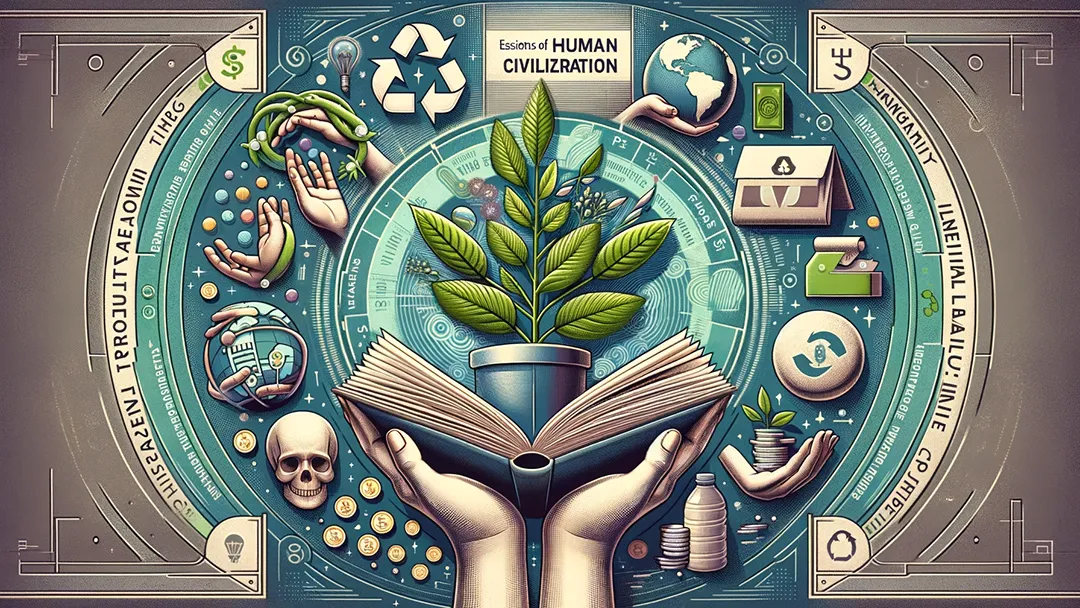
Profit Over People: Unchecked Capitalism and the Erosion of Social Systems
A critical look at how unchecked capitalism and corporate investments in warfare—highlighted by Spotify's recent defense spending—threaten social systems, urging a return to community, education, and stewardship.
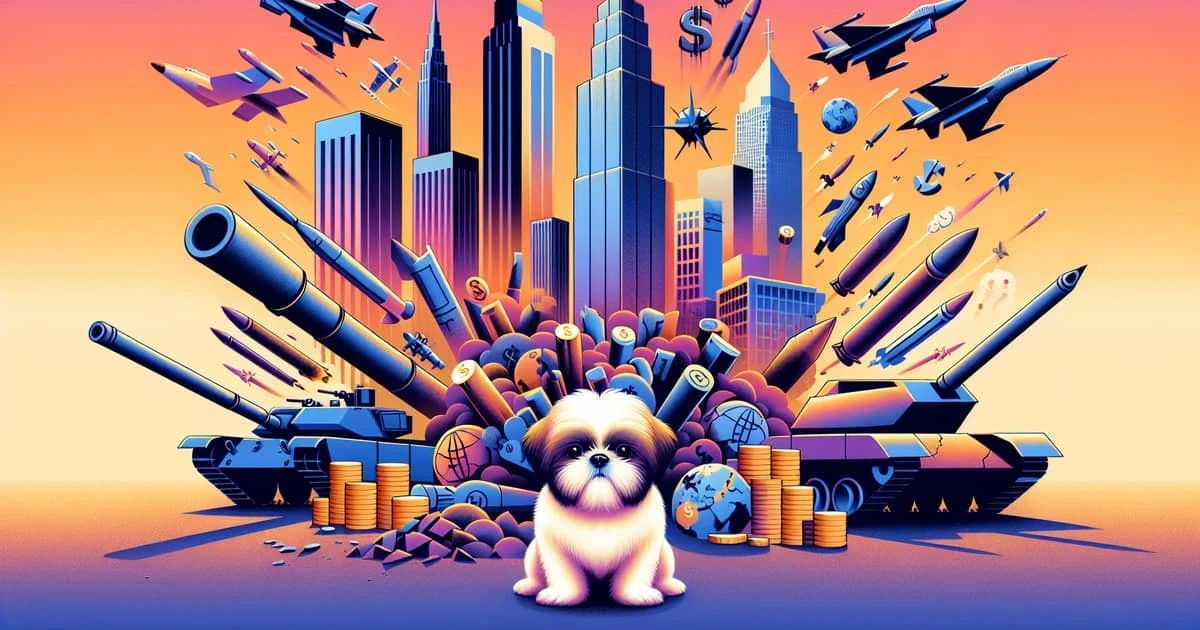
Capitalism, when left without meaningful oversight, threatens the very social systems that support the majority of people. It prioritizes profit over well-being, often at the expense of ethical boundaries and human life itself.
Just yesterday, a musician friend of mine, William King of Billy King and the Bad Bad Bad, posted an Instagram story highlighting a disturbing reality: Spotify’s CEO has been investing in AI drone weaponry technology. Music, artificial intelligence, and warfare—three things that should never intersect—are now bound by capital. This revelation is shocking not only because it is legal, but because it highlights a profound ethical void. It suggests a societal acceptance of profiting from conflict. The legality of such investments does not make them moral; it signals a system where profit is paramount, regardless of the human cost.
This raises a fundamental question: what is the purpose of government if not to serve its people? As a species, we must ask ourselves what we are building and who it serves.
The primary mandate of any government should be to improve the lives of its citizens—to ensure that everyone benefits from the collective progress of society. When a government becomes complicit in the “war machine” or prioritizes corporate interests over public welfare, it fails that mandate. It becomes a revolutionary betrayal of the social contract. Yet, we have become so desensitized to this dynamic that what should be an outrage is often met with apathy.
We often hear the term “American hegemony,” and its influence is rampant. It feels as though our capitalist society has infected the collective consciousness, placing individual gain above the common good. The antidote to this is critical thinking, yet our ability to think critically is being systematically dismantled by the erosion of our education system. This is not just a policy failure; it is a crisis of our imagined order—a structure that has become toxic to the majority of humans on Earth.
This perspective may seem controversial to some, but it comes down to the foundations upon which we build our lives. Government is a reflection of our culture, and I am personally advocating for a global culture that moves beyond tribalism and nationalism. We share a finite planet; there is no more surface to discover, only a shared future to navigate.
I admit, I am growing weary of a system predicated on exploitation. My vision is for a human species less focused on “getting ahead” at the expense of others and more focused on mutual uplift. We achieve this by prioritizing education, connection, and stewardship, while fostering honor, vision, and ambition. We must listen to those who have less and work to raise the baseline for everyone. Life can be fulfilling and exciting without being a zero-sum game.
Ultimately, these systems—government, economy, nations—are all imagined orders. The question is: what do we want to imagine? John Lennon’s “Imagine” captures this sentiment perfectly. It challenges us to envision a world not bound by these divisive constructs.
We must remember that the government is not an abstract entity; it is us. It is our banker, holding our social and cultural capital. Currently, it is withholding that capital—denying us quality education and the preservation of our environment—all for the sake of the dollar, another imagined order. This pursuit has poisoned our collective psyche with dreams of total control and luxury, blinding us to true value.
I truly believe we can build a better government. We can demand transparency, ethical officials, clear policy, and systems that serve the people. We can rebuild our communities and restore the quality of our education. We have the power and the resources to make this reality.
As Gandhi famously said, “The world has enough for everyone’s need, but not for everyone’s greed.” The squeeze we feel from the capitalist oligarchy is real, but so is the potential for change. It starts with reimagining our priorities and reclaiming our systems to serve life, not just profit.
Thank you, and Dogspeed.